Trade · Berlins Today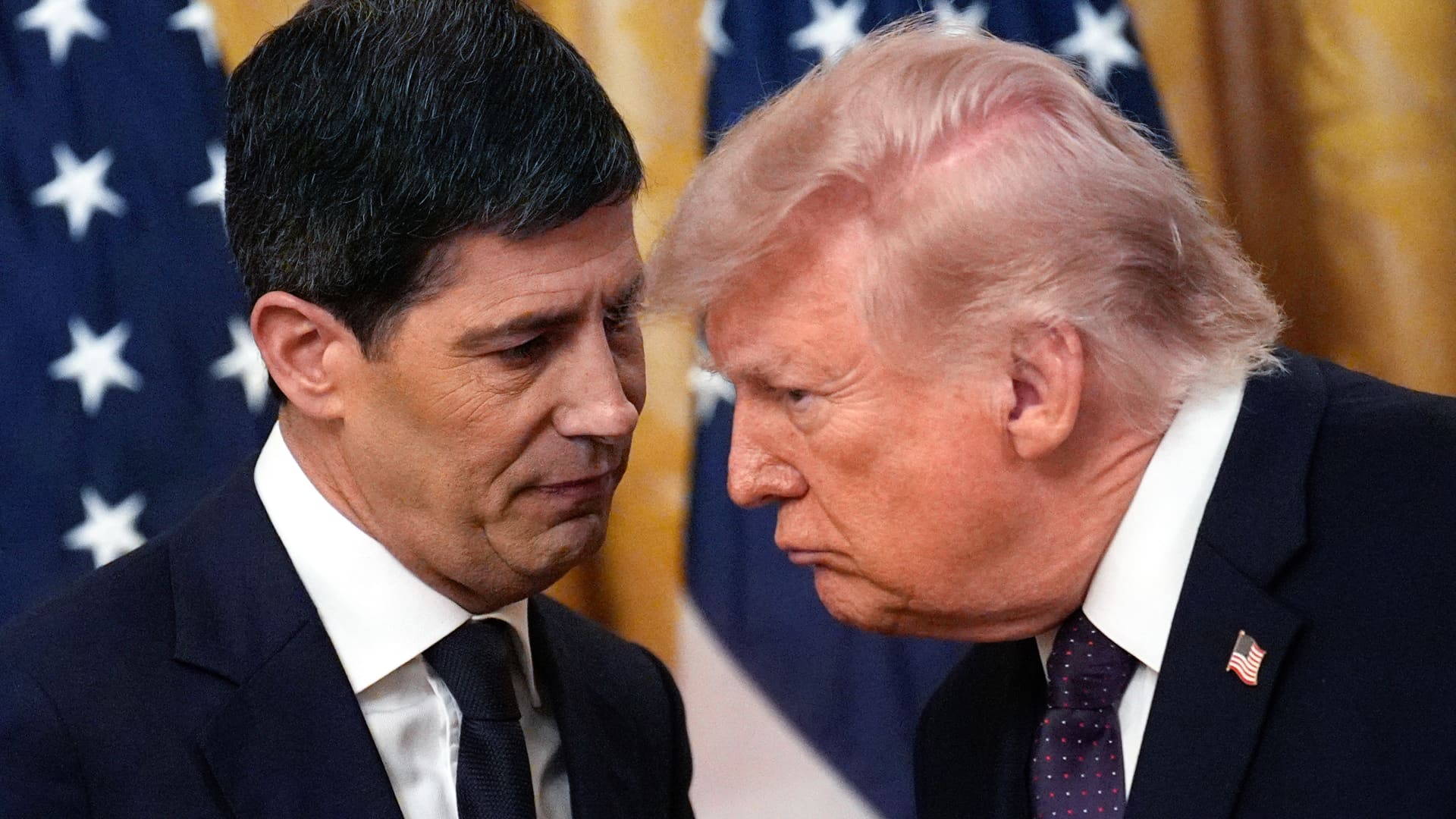
President Donald Trump and Kevin Warsh, chairman of the Federal Reserve, during a swearing-in ceremony in the East Room of the White House in Washington, May 22, 2026. Yuri Gripas | Bloomberg | Getty Images Hello, this is Leonie Kidd coming to you from London. Welcome to another edition of CNBC's Daily Open.
This week's policy decision already presented a dilemma for Chairman Kevin Warsh. Hike rates and risk the ire of President Donald Trump. Hold rates and risk the ire of the markets for looking out of touch.
And things just got more complicated with the 10-year Treasury yield hitting a level not seen since 2007, oil prices holding above the triple-digit levels, and an AI sell-off wiping trillions of dollars from some of Wall Street's AI darlings. Read on for more. What you need to know today The market is not making things easy for the Federal Reserve this week.
The central bank kicks off its two-day meeting on Tuesday with a raft of price dislocations to consider as it sets policy. Markets are pricing in a near-certain hike by 25 basis points on Wednesday, with the probability of another December hike now at 75%. AI for an AI Yield to the bond market Next up, the 10-year Treasury yield has risen to its highest level since 2007 in early Tuesday trading.
This came after the yield crossed the psychological 5% level during the session on Monday. The deepening sell-off in U.S. government debt will put further pressure on the Fed and Chair Kevin Warsh to target inflation, which is holding well above the 2% target. Oil price pressure And don't forget, oil prices are rising, with both futures for international benchmark Brent crude and U.S.
West Texas Intermediate futures holding above the triple-digit level per barrel. Reports of fresh Houthi strikes on Saudi Arabia and renewed attacks on vessels in the Strait of Hormuz have maintained upward pressure on crude prices. Oil and Treasury yields are moving in near lockstep, with the correlation at its strongest since 2019.
Read more on this here . U.S. stock futures have dipped ahead of Tuesday's session, with a broadly negative handover from Asia, and Europe called to open in the red. — Leonie Kidd And Finally... Standard Chartered CEO Bill Winters on the ‘reckless path’ that shaped his banking career Bill Winters planned to become a diplomat.
Instead, a job at J.P. Morgan led him into banking and eventually to a pivotal early-career decision: move into the emerging derivatives business despite knowing little about it. In this episode of Executive Decisions , the Standard Chartered CEO tells Steve Sedgwick why that experience helped shape a career philosophy he still shares with younger colleagues: when rare opportunities arise, sometimes you should "take the reckless path." For Winters, that doesn't mean being careless; it means being prepared to choose the less conventional route when it offers more to learn. — Steve Sedgwick
Source: CNBC